
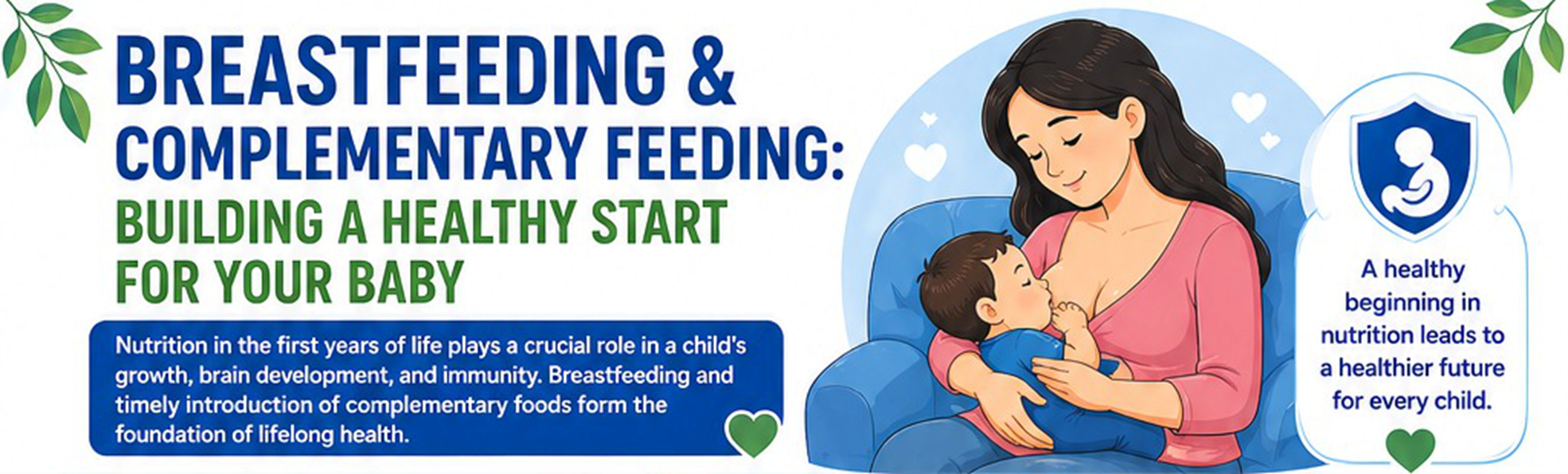
Nutrition in the early years of life plays a vital role in a child’s growth, brain development,
and immunity.
Breastfeeding along with timely introduction of complementary foods forms the foundation of lifelong
health.
Importance of Breastfeeding :- Breastfeeding is the most natural and
complete form of nutrition for infants..
It provides all essential nutrients required for early growth and development.
Benefits for the Baby
➜ Provides ideal nutrition for the first 6 months
➜ Strengthens immunity and reduces infections
➜ Protects against diarrhea, respiratory infections, and allergies
➜ Supports brain development
➜ Promotes healthy growth and bonding
Benefits for the Mother
➜ Helps in faster recovery after delivery
➜ Reduces the risk of certain cancers
➜ Strengthens emotional bonding
➜ Supports natural weight management
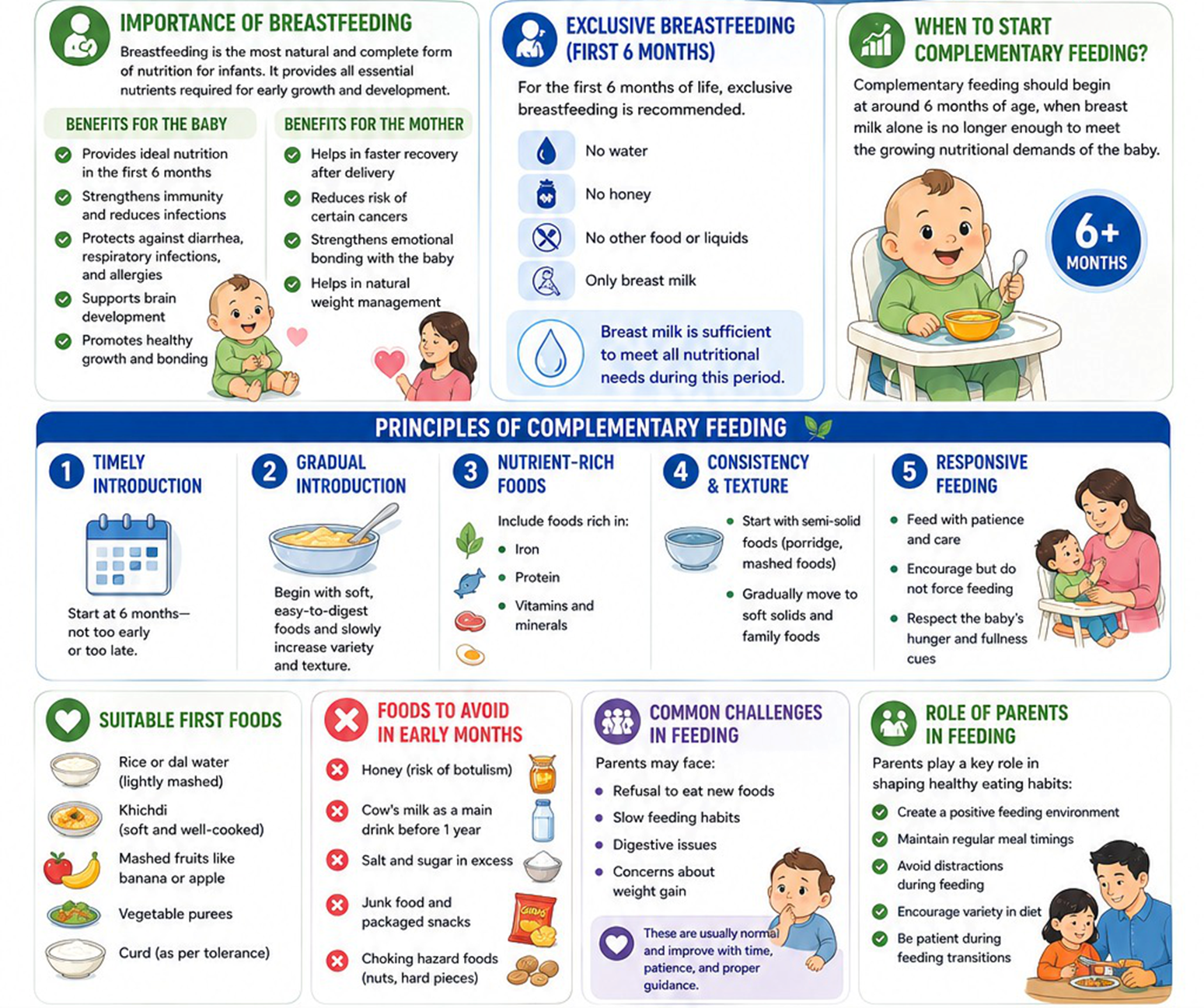
Exclusive Breastfeeding (First 6 Months)
For the first 6 months, exclusive breastfeeding is strongly recommended.
➜ No water
➜ No honey
➜ No other food or liquids
➜ Only breast milk
➜ Breast milk alone is
sufficient for all nutritional needs during this stage
When to Start Complementary Feeding?
Complementary feeding should begin at around 6 months of age, when breast milk alone is no longer enough
to meet the baby’s growing nutritional needs.
Timely Introduction
➜ Start at 6 months
➜ Avoid introducing too early or too late
Gradual Introduction
➜ Begin with soft, easy-to-digest foods
➜ Slowly increase variety and texture
Nutrient-Rich Foods
Include foods rich in
➜ Iron
➜ Protein
➜ Vitamins and minerals
Consistency & Texture
➜ Start with semi-solid foods (porridge, mashed foods)
➜ Gradually shift to soft solids and family foods
Responsive Feeding
➜ Feed with patience and care
➜ Encourage but do not force feeding
➜ Respect hunger and fullness cues
Suitable First Foods
➜ Rice or dal (soft, mashed)
➜ Khichdi (well-cooked and soft)
➜ Mashed fruits (banana, apple)
➜ Vegetable purees
➜ Curd (as tolerated)
Foods to Avoid in Early Months
➜ Honey (risk of botulism)
➜ Cow’s milk as a main drink before 1 year
➜ Excess salt and sugar
➜ Junk food and packaged snacks
➜ Hard foods that may cause choking
Common Feeding Challenges
Parents may face:
➜ Refusal to try new foods
➜ Slow eating habits
➜ Digestive issues
➜ Concerns about weight gain
➜ These are usually normal and improve with time, patience, and guidance
Role of Parents in Feeding
Parents play a key role in developing healthy eating habits:
➜ Create a positive feeding environment
➜ Maintain regular meal timings
➜ Avoid distractions (TV/mobile)
➜ Encourage variety in diet
➜ Be patient during transitions
Why Early Nutrition Matters
The first 1000 days of life (from conception to 2 years) are crucial. Good nutrition during this period supports:
➜ Brain development
➜ Strong immunity
➜ Healthy physical growth
➜ Reduced future disease risk
When to Consult a Pediatric Specialist
Consult a specialist if:
➜ Baby is not gaining weight properly
➜ Feeding difficulties persist
➜ Frequent vomiting or digestive issues occur
➜ Concerns about growth or nutrition arise
➜ Early guidance ensures better outcomes
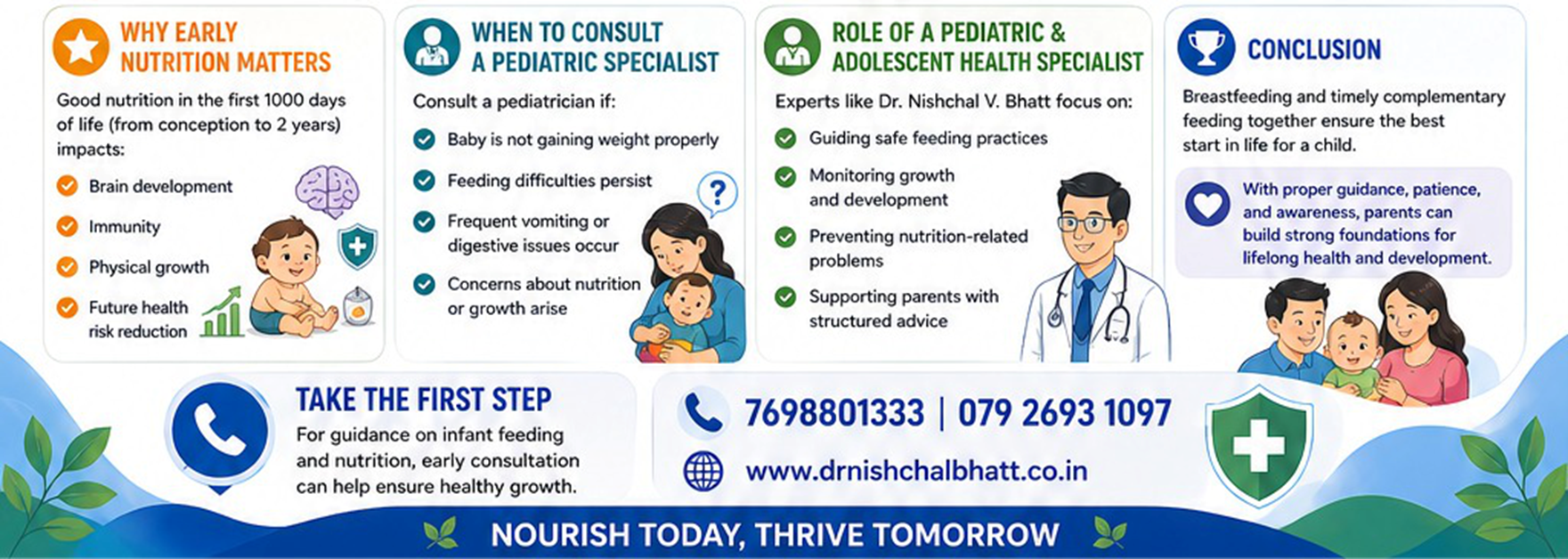
Role of a Pediatric & Adolescent Health Specialist
Specialists help by :
➜ Guiding safe feeding practices
➜ Monitoring growth and development
➜ Preventing nutrition-related issues
➜ Supporting parents with structured advice
Conclusion
Breastfeeding and timely complementary feeding together provide the best start in life.
With proper guidance, awareness, and patience, parents can build a strong foundation for
lifelong health and development.
Take the First Step
For guidance on infant feeding and nutrition, early consultation can help ensure healthy growth.
➜ Let’s work together
to nurture healthier, happier, and stronger adolescents—because today’s habits shape tomorrow’s
health.
Pediatric Doctor in Ahmedabad | Pediatricians Doctor in Ahmedabad | Parent & Teen Counselling in Ahmedabad
2025 Copyright
Dr. Nishchal Bhatt.All Rights Reserved. Design By
City Business Group 
