
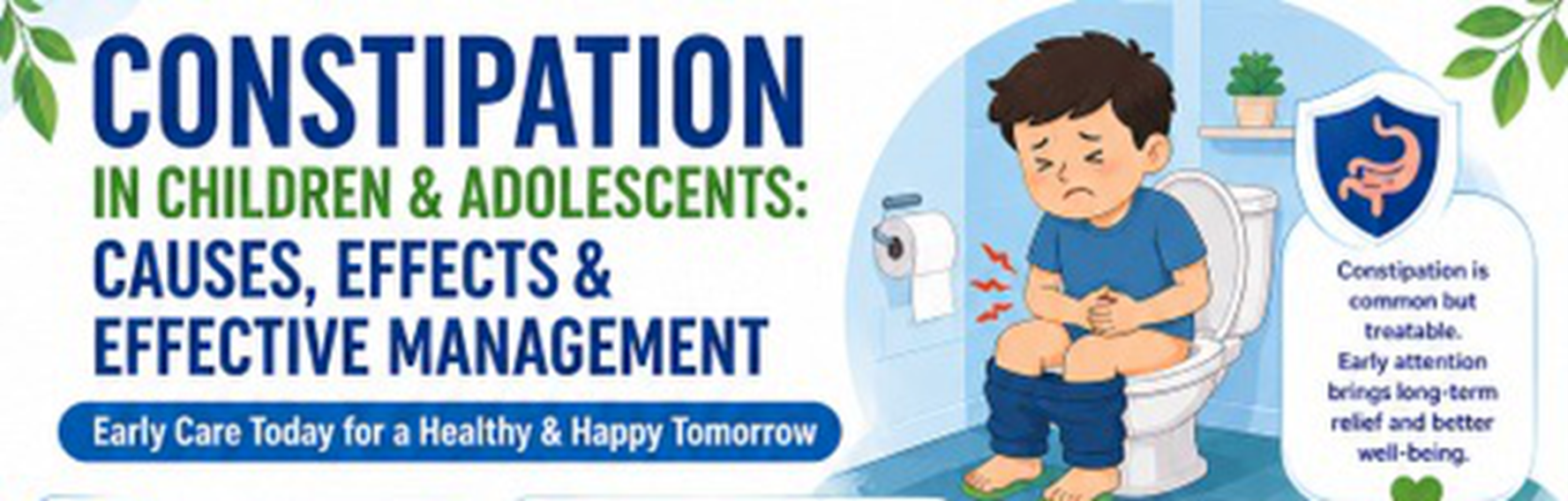
Constipation is one of the most common digestive problems seen in children and adolescents.
Although highly treatable, it is often ignored or misunderstood, leading to discomfort,
behavioral issues, and long-term bowel problems. Early identification and proper management
are essential for a child’s healthy growth and overall well-being.
What is Constipation?
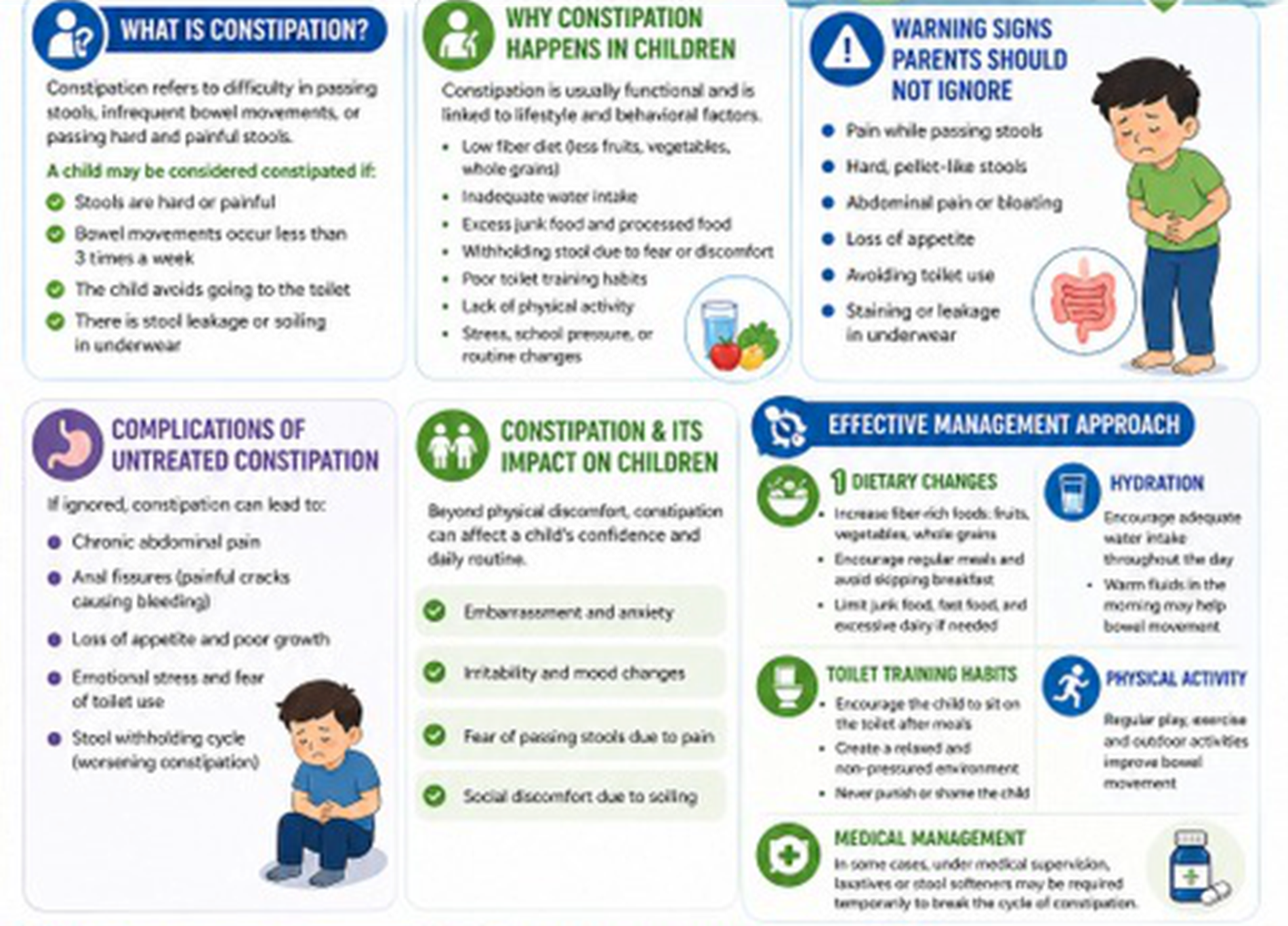
Constipation refers to:
➜ Difficulty in passing stools
➜ Infrequent bowel movements
➜ Passing hard, dry, or painful stools
In children, constipation is not just about frequency, but also about pain, discomfort, and incomplete bowel
emptying.
A child may be constipated if
➜ Stools are hard or painful
➜ Bowel movements occur less than 3 times per week
➜ The child avoids or delays going to the toilet
➜ There is stool leakage or soiling in underwear
Why Constipation Happens in Children
In most cases, constipation is functional (not due to a serious disease) and is linked
to lifestyle and behavioral factors.
➜ Low-fiber diet (less fruits, vegetables, whole grains)
➜ Inadequate water intake
➜ Excess junk and processed food
➜ Withholding stool due to fear or discomfort
➜ Poor toilet training habits
➜ Lack of physical activity
➜ Stress, school pressure, or routine changes
Warning Signs Parents Should Not Ignore
In most cases, constipation is functional (not due to a serious disease) and is linked
to lifestyle and behavioral factors.
➜ Pain while passing stools
➜ Hard, pellet-like stools
➜ Abdominal pain or bloating
➜ Loss of appetite
➜ Avoiding toilet use
➜ Staining or leakage in underwear
Complications of Untreated Constipation
If not addressed early, constipation can lead to
➜ Chronic abdominal pain
➜ Anal fissures (painful cracks with bleeding)
➜ Loss of appetite and poor growth
➜ Emotional stress and fear of toilet use
➜ Stool withholding cycle (worsening constipation)
Impact on Children
Constipation is not just a physical issue—it can affect a child’s confidence, behavior, and daily routine.
➜ Children may experience
➜ Embarrassment and anxiety
➜ Irritability and mood changes
➜ Fear of passing stools due to pain
➜ Social discomfort due to soiling
Dietary Changes
Constipation is highly manageable with the right approach and consistency.
➜ Increase fiber-rich foods (fruits, vegetables, whole grains)
➜ Encourage regular meals (especially breakfast)
➜ Limit junk food, fast food, and excessive dairy if needed
Hydration
➜ Ensure adequate water intake throughout the day
➜ Warm fluids in the morning can help stimulate bowel movement
Healthy Toilet Habits
➜ Encourage sitting on the toilet after meals
➜ Create a relaxed, pressure-free environment
➜ Never punish or shame the child
Physical Activity
➜ Regular play and exercise improve bowel movement
➜ Encourage outdoor activities and reduce sedentary habits
Medical Management
In some cases, temporary use of laxatives or stool softeners may be required under medical
supervision to break the cycle of constipation.

When to Consult a Specialist
Seek medical advice if:
➜ Constipation persists for weeks
➜ There is pain or bleeding during stools
➜ Stool leakage or soiling is present
➜ Lifestyle and diet changes are not improving symptoms
Role of a Pediatric & Adolescent Health Specialist
Constipation often overlaps with nutritional, behavioral, and emotional factors.
A specialist focuses on:
➜ Identifying the root cause
➜ Correcting dietary and lifestyle habits
➜ Preventing recurrence
➜ Providing structured guidance for both child and parents
Prevention is the Key
Most cases can be prevented with simple daily habits:
➜ Balanced, fiber-rich diet
➜ Regular toilet routine
➜ Active lifestyle
➜ Adequate hydration
➜ Early attention to symptoms
Conclusion
Constipation in children is common but completely manageable.
With timely intervention, proper diet, and medical guidance, children can achieve long-term relief and improved quality of life.
Take the First Step
For persistent constipation or digestive concerns, early consultation is important for accurate diagnosis and personalized care.
➜ Healthy Gut, Happy Child
Pediatric Doctor in Ahmedabad | Pediatricians Doctor in Ahmedabad | Parent & Teen Counselling in Ahmedabad
2025 Copyright
Dr. Nishchal Bhatt.All Rights Reserved. Design By
City Business Group 
